
Application of Boron Carbide in Welding Electrodes
1. Application Orientation
Boron carbide (B₄C) is a core hard alloy additive for hardfacing wear-resistant welding electrodes. It is blended into electrode coatings or flux cores. Hard wear-resistant phases are precipitated after surfacing welding, which greatly improves the hardness, wear resistance and high-temperature stability of weld deposits. It is the preferred raw material for low-cost and high-performance wear-resistant welding materials.
2. Core Functions
Improve Hardness and Wear Resistance
Boron carbide features a Mohs hardness of 9.6. It forms hard boride particles after surfacing, enabling the weld layer to reach HRC65~70, and delivers outstanding resistance to abrasive wear caused by sediment, ore, coal powder and other particles.
Optimize High-temperature Performance
With a melting point of 2450℃, boron carbide will not soften or peel off under high-temperature working conditions and possesses excellent red hardness, ideal for workpieces serving in high-temperature wear environments.
Purify Weld Seam and Stabilize Electric Arc
The boron element in boron carbide acts as deoxidizer and desulfurizer, reducing pores and slag inclusions, refining grains, and improving welding formation and slag detachability.
Reduce Production Cost
To achieve the same wear resistance, boron carbide costs far less than tungsten carbide, which effectively cuts down the selling price of wear-resistant welding electrodes.
Enhance Corrosion Resistance
Boron carbide boasts stable chemical properties, which improves the weld layer’s resistance to acid, alkali and medium erosion.
3. Technical Indicators of Boron Carbide for Welding Electrodes
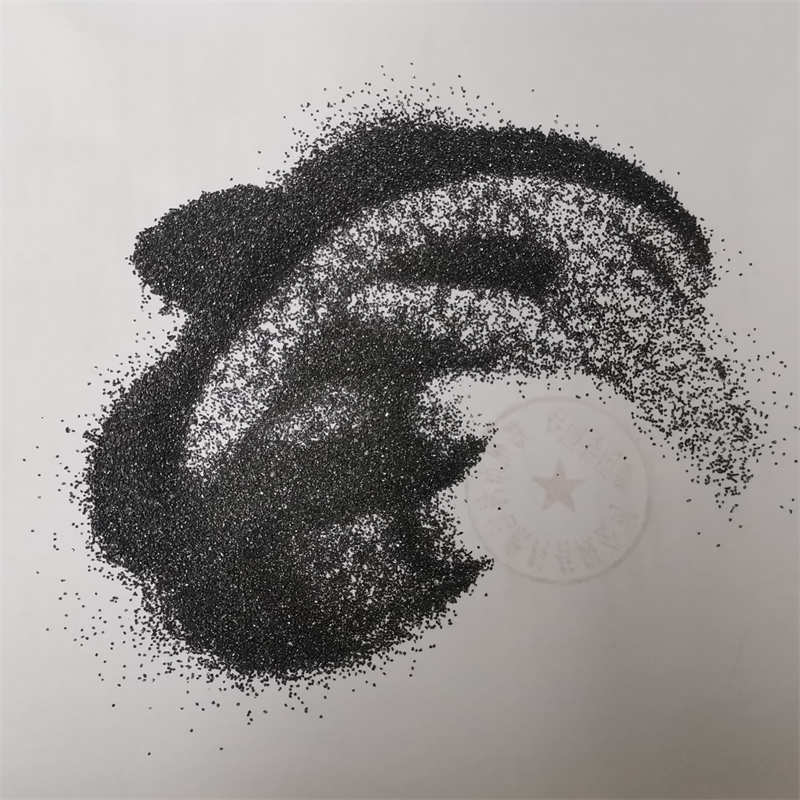
- Purity: Industrial grade B₄C: 95%-98%; High-end wear-resistant electrode grade B₄C ≥99%
- Common particle sizes: 60-150 mesh, 80-200 mesh, F80
- Impurity control: Strictly limit iron and silicon content to avoid weld brittleness and cracking
4. Adding Methods and Proportion of Boron Carbide
Coated Welding Electrodes
Directly mix boron carbide into outer coatings, with mainstream addition ratio ranging from 6% to 20%.
- General wear resistance: 6%-10% boron carbide
- High-hardness super wear resistance: 12%-20% boron carbide
Flux-cored Welding Wires
Blend boron carbide into inner core powder of welding wires for higher uniformity, widely used in mass production.
Matching System
It is usually mixed with alloy powder such as chromium, manganese and graphite to form boron-chromium series wear-resistant surfacing layers.
5. Main Matched Welding Electrode Grades
- D916: General boron carbide wear-resistant electrode, suitable for light and medium wear conditions
- D958: High-content boron carbide electrode, specially used for heavy wear in mining and sand field industries
- Various special surfacing electrodes for mining, brick-making and cement industries
6. Applicable Working Conditions and Workpieces
- Mining industry: Scraper conveyor troughs, crusher parts, mine chutes
- Building materials industry: Brick machine screws, mixer blades, extrusion screws
- Electric power & coal industry: Coal mill parts, fan impellers, coal conveying pipelines
- Water conservancy industry: Mud pump blades, wear-resistant parts for sediment conveying
7. Advantages and Disadvantages
Advantages
- Excellent wear resistance, greatly extending service life of workpieces
- Good high-temperature resistance and oxidation resistance with high cost performance
- Simple welding process and wide applicability
8. Industry Application Trends
- Market demand for wear-resistant repair products in mining and construction machinery industries keeps rising.
- Low-cost eco-friendly wear-resistant welding materials are gradually replacing high-priced tungsten carbide electrodes and becoming mainstream products.
- Superfine high-purity boron carbide powder is increasingly applied in high-end precision wear-resistant surfacing fields.