
Sapphire grinding and polishing with boron carbide
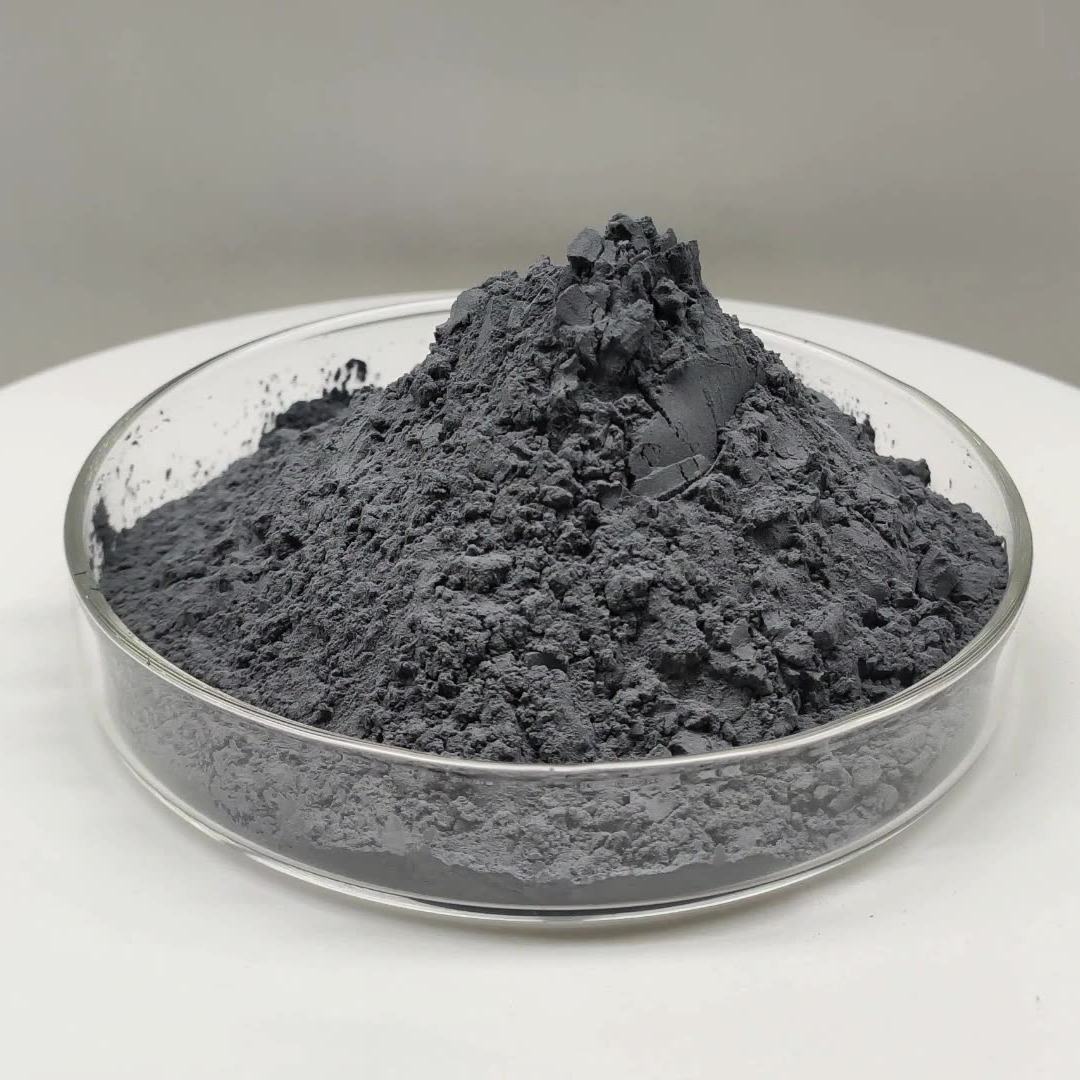
boron carbide (B₄C) 1200# grit (≈15µm particle size) is a highly effective abrasive for the intermediate lapping stage of sapphire processing. It is not a final polishing abrasive—it is used for rapid material removal and planarization before the final polishing steps to achieve optical transparency.
1. Core Application: Fine Lapping, Not Final Polish
Purpose: Remove deeper scratches from coarser abrasives (e.g., 280# or 600# diamond or SiC), achieve precise thickness control, and create a uniformly smooth, matte surface.
Outcome: Leaves a fine, gray, matte finish with a surface roughness (Ra) of roughly 0.8–2.0 µm, but with sub-surface damage (SSD) that must be removed later.
2. Why Boron Carbide 1200# is Suitable
Hardness: At ~9.5 Mohs, B₄C is harder than sapphire (9 Mohs) and much harder than SiC or Al₂O₃, enabling efficient cutting.
Fast Stock Removal: Typically achieves 5–20 µm/min material removal rates, faster than SiC or alumina of comparable grit.
Cost-Effective: Significantly cheaper than diamond slurry, offering a good balance of speed and cost for intermediate steps.
3. Standard Process Parameters
| Parameter | Recommendation |
|---|---|
| Machine | Single/double-sided lapping machine |
| Lapping Plate | Cast iron, tin, or tin-bronze |
| Slurry Mix | B₄C 1200# powder + DI water (20–30 wt%). Optional: pH stabilizer (e.g., KOH to pH 9–10) or rust inhibitor. |
| Pressure | Low–medium (3–8 psi / 20–55 kPa) |
| Speed | 30–70 rpm |
| Slurry Feed | Continuous or frequent intermittent feed to prevent drying/glazing |
| Carrier | Compatible with sapphire workpiece (e.g., ceramic, stainless steel) |
4. Critical Precautions
Sub-Surface Damage (SSD): This is the main drawback. SSD depth can be 1.5–3× the grit size (≈20–45 µm deep). This damaged layer must be completely removed in subsequent polishing steps.
Contamination Control: B₄C is electrically conductive and extremely hard. Meticulous cleaning of parts and machine is required before moving to the final polishing step (with diamond or silica). Even trace contamination will cause deep scratches.
Health & Safety: Wear respiratory protection (N95+) when handling dry powder. Use eye protection and gloves.
Plate Wear: B₄C will wear down lapping plates faster than softer abrasives. Regular plate conditioning (re-surfacing) is necessary.
5. Typical Sapphire Process Flow Using B₄C 1200#
Slicing → 2. Rough Lapping (e.g., 325# diamond) →
Fine Lapping with B₄C 1200# (key transition step) →
Pre-Polish (e.g., 3µm diamond on hard pad) →
Final Polish (colloidal silica or <1µm diamond on soft pad).
Note: Steps 4 and 5 are essential to remove SSD and achieve optical clarity.
6. Alternative Abrasives Comparison
| Abrasive | Pros | Cons | Best For |
|---|---|---|---|
| B₄C 1200# | Fast, cost-effective, sharp | Creates SSD, messy, conductive | High-volume fine lapping |
| Diamond 9µm | Faster than B₄C, less SSD, cleaner | Expensive | High-precision lapping |
| SiC 1200# | Low cost, low contamination risk | Slower, wears quickly | Budget lapping, softer materials |
| Alumina 1µm | Very low SSD, cheap | Extremely slow for stock removal | Final polish of softer crystals |
7. Practical Tips for Use
Mix slurry to a creamy consistency; avoid too thin (splatter) or too thick (poor distribution).
Monitor flatness regularly—B₄C can cause dishing if pressure is uneven.
Transition carefully: After B₄C, clean parts ultrasonically in DI water + detergent, and rinse thoroughly before moving to the next step.
Test on samples first to optimize pressure, speed, and slurry concentration for your specific setup.
Final Recommendation
Boron carbide 1200# is an excellent choice for the fine lapping stage of sapphire when:
You need a balance of speed and cost.
You have a robust cleaning protocol to prevent contamination.
Your process includes sufficient subsequent polishing steps to eliminate SSD.
If your goal is a scratch-free, transparent sapphire surface, B₄C 1200# is only a preparatory step. Do not use it as the final abrasive. The final polish must be done with diamond or colloidal silica to achieve optical quality.