
Boron Carbide 2μm F1200 6000# for Polishing, Deburring & Flow Rate Improvement of Common Rail Nozzle Orifices
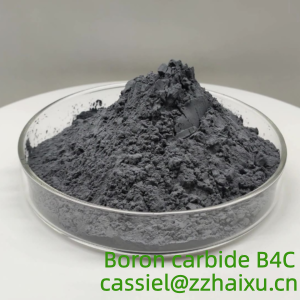
Boron carbide micro-powder W2.5 (≈2.5μm) / 2μm is an ideal abrasive for precision polishing, deburring and flow rate enhancement of common rail injector nozzle holes, especially suitable for abrasive flow machining (AFM) / extrusion honing processes.
1. Particle Size Explanation: W2.5 vs 2μm
2μm F1200 6000#: Nominal particle size, with D50 ≈ 2.0μm and a more concentrated particle size distribution.
2. Why Boron Carbide (B₄C)?
1. Extremely High Hardness (Strong Cutting Ability)
- Mohs hardness: 9.3, micro-hardness: 55–67 GPa, second only to diamond and CBN.
- Efficiently cuts hard alloys (common nozzle materials) and quickly removes recast layers and burrs from laser/EDM machining.
2. Precision Polishing (Low Roughness)
- Fine 2.5/2μm particles can polish the inner wall of nozzle holes from Ra 1.6μm down to Ra 0.02–0.05μm.
- Rounds inlet edges, eliminates stress concentration and improves high-pressure durability.
3. Accurate Flow Rate Improvement
- Slightly grinds and uniformly reshapes orifices, increasing flow rate by 10%–30%.
- Flow variation controlled within ±1%, meeting China 6 / Euro 6 emission standards.
4. Chemical Stability
- Acid and alkali resistant, non-reactive with workpieces, compatible with oil-based and water-based abrasive fluids.
- Low density (2.51g/cm³), good suspension performance, not easy to settle.
3. Recommended Key Parameters
- Particle size: W2.5 (2.5μm) / 2μm (standard fine polishing grade for common rail nozzles).
- Purity: B₄C ≥ 95% (high purity reduces scratch risks from impurities).
- Particle size distribution: Narrow distribution (Span ≤ 1.2) to prevent clogging from oversized particles.
- Process: Abrasive flow machining (extrusion honing) under high pressure (10–30MPa) with reciprocating cycles.
-

4. Expected Effects
- Deburring: Complete removal of burrs at orifice edges and cross holes.
- Polishing: Mirror-finished inner wall, Ra ≤ 0.05μm.
- Flow rate: Increased by 15%–25%, variation < ±2%.
- Atomization: Smooth orifice edges for more uniform atomization, lower fuel consumption and emissions.
5. Application Guidelines
- Abrasive concentration: 5%–15% (adjust according to flow rate targets).
- Cycle times: 5–20 cycles (depending on initial surface roughness).
- Medium selection: Oil-based (excellent rust prevention and lubrication); water-based (eco-friendly and easy to clean).
- Filtration: Precision filtration is mandatory to prevent particle scratching.
6. Comparison: Boron Carbide vs Other Abrasives
| Abrasive | Hardness | Cutting Force | Precision | Cost | Application Scenario |
|---|---|---|---|---|---|
| Boron Carbide | Extremely High | Strong | Mirror | Medium-High | Fine polishing & flow improvement of common rail nozzles |
| Silicon Carbide | High | Medium | High | Medium | Coarse polishing, heavy deburring |
| White Fused Alumina | Medium | Medium | Good | Low | Ordinary nozzles, non-alloy parts |
| Diamond | Highest | Extremely Strong | Ultra-high | High | Super-hard alloys, extreme working conditions |
Summary
Boron carbide is the optimal choice to achieve high-precision polishing, efficient deburring and stable flow rate improvement for common rail injector nozzles.