
Boron carbide (B₄C) is a high‑hardness boron‑carbon compound. When added to the coating of hard‑facing welding electrodes, it decomposes under the high temperature of the welding arc, transferring boron and carbon elements into the molten pool. Hard boride phases are formed within the weld metal, which greatly improves the wear resistance of the hard‑facing layer.
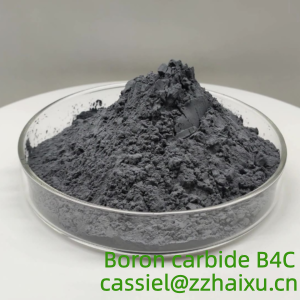
Available size boron carbide:80-120 60-150
Precipitation of hard borides for improved wear resistance Under the high‑temperature effect of the welding arc, boron carbide decomposes. Boron and carbon react with alloy elements such as iron, chromium and manganese in the weld to form high‑hardness borides including Fe‑B and Cr‑B. These borides are dispersively distributed in the weld matrix, remarkably raising the HRC hardness of the hard‑facing layer and resisting abrasive wear. It is suitable for working conditions with scouring wear from sand, gravel and mineral materials.
Deoxidation and purification of the weld molten pool Boron has strong deoxidizing capacity. During welding, it consumes oxygen inside the molten pool, reducing defects such as pores and slag inclusions, purifying the molten pool and improving weld bead formation.
Grain refinement of weld metal Trace boron can refine weld grain structure, optimize the microstructure of the hard‑facing layer to a certain extent and enhance the strength of deposited weld metal.